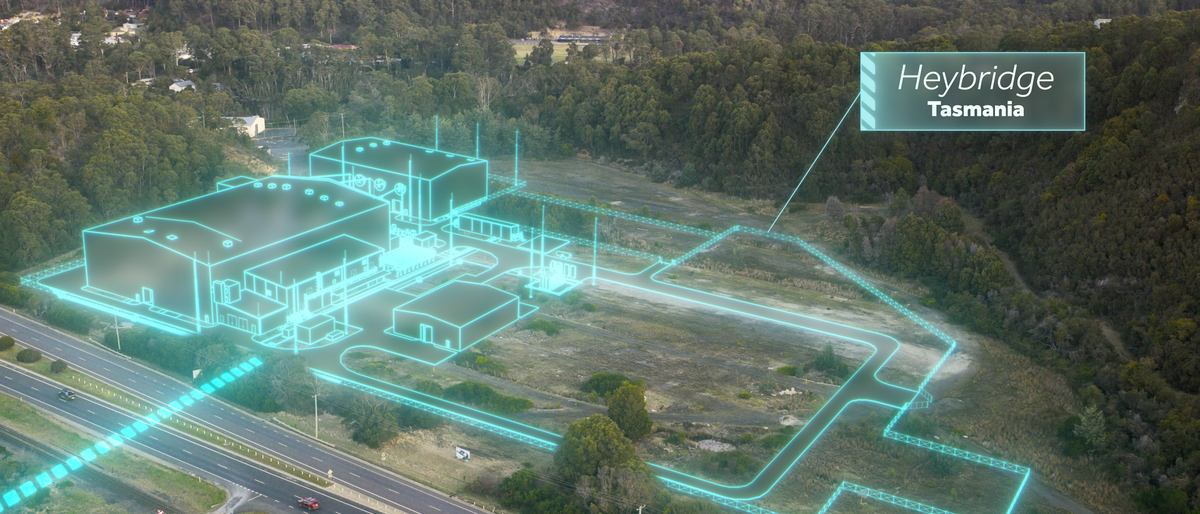
The Marinus Link Project will connect the electricity grids in Victoria and Tasmania via a 345 kilometre transmission cable.
The 320 kV line will run underground through 90 km of Victorian countryside and under the Bass Strait seabed for the remaining 255 km.
Hitachi Energy will provide our advanced Grid Forming High Voltage Direct Current (HVDC) converter technology inside the converter station at each end of the transmission cable so electricity can safely and efficiently flow between the state’s two electricity networks.
HVDC is used worldwide, particularly in undersea applications, as it is the most efficient way to transmit bulk power over long distances – meaning more energy can find its way to where it’s needed.
The scale of the equipment being used in the fit out is impressive.
Forty-eight 11 metre high valve stations, eight giant HVDC transformers, plus a range of high voltage power quality equipment.
Marinus Link will help Tasmania import excess solar and wind energy from the mainland and export hydro and wind power back when the mainland needs it most.
Tasmania is blessed with some of the best hydropower resources in Australia. Along with the Snowy scheme this resource builds resilience into the interconnected electricity system by providing deep long-term firming capacity supporting renewable energy from intermittent resources such as wind and solar. Hydro is an important element in the mix for building our sustainable energy future with the lowest cost technology mixed with shorter duration battery systems.
It is estimated that Marinus Link will be a major catalyst for new renewable energy in both Victoria and Tasmania. A major driver for up to 3 GW of wind in Tasmania and 15 GW of solar and onshore wind in Victoria and will help unlock the, so called, Battery of the Nation project in Tasmania.
Hitachi Energy’s HVDC technology which will be deployed for the Marinus Link project has a dual role in the Victorian and Tasmanian electricity systems. Not only will it help transport electricity more efficiently, but it will also play an important role of supporting the grid with the implementation of grid forming technology – an Australian first.
Grid forming technology such as that being deployed for Marinus Link provides system services which were traditionally provided by the large synchronous generators which are progressively being retired from the system. Given two-thirds of our country’s coal fired power stations are scheduled for closure by mid next decade, grid forming technology plays an increasingly important role in the electricity system.
Marinus Link is unique. It builds resilience in the energy system through interconnection and greater access to deep firming capacity, but also by supporting system strength services.